Monday, August 9, 2021

PRATIK LA ISSUE SPECIAL : AMERICAN NOVELIST AND EDITOR TOM LUTZ on Coming to LA: Images of the Migrant City


TOM LUTZ

Coming to LA:

Images of the Migrant City

with an assist by  

Juan Felipe Herrera


We see the myth long before the reality, and even when we are looking right at the dingy street, we think: Sunset Boulevard. The old-school iconography—palm trees, the Hollywood sign, swimming pools, Rodeo Drive, beautiful children, the Santa Monica Pier—these effigies engulf our perception. As if sprung from our unconscious, images from the other media wash, too—of gangbangers, Charlie Manson, police brutality, the Bling Ring, homeless misery, smog, fiery uprisings, oceans of traffic—bubble up without surcease. When we arrive, those of us from elsewhere, which is most of us, we move through the city with our Gestalt switch twitching: face, vase, face, vase, paradise, hellscape. Mike Davis described this doubleness, in City of Quartz, as “sunshine and noir.”It makes the city, for those of us who alight from afar, both easy and hard to read—not illegible, exactly, but hieroglyphic, a series of signs that we recognize as a language of place, but which we cannot quite, at first, translate. Or like a poem we cannot quite understand—we get the images, we hear them, we see them, we even see what they mean. We just can’t quite put them together.

*

Last Tuesday, my Lyft driver was from Beirut. He had lived a number of places, including Germany, Miami, New York. He lived near the airport, in an apartment that he split with his business partner, and which was also their office and warehouse. They had a fashion company. He liked Los Angeles—it was his favorite city so far, except for Beirut.

‘I can’t believe you have been to Jordan, but not Lebanon,’ he said. ‘Jordan has nothing! Amman, Aqaba—these are boring cities!’

‘It has Petra,’ I said, the ancient red city carved from the living rock.

‘Yes, but this is one day. Beirut—ah, you can’t believe what a great city Beirut is. Like LA, on the sea….’

‘Do you want to go back?’

‘Some day,’ he said. ‘But to do business there, good business—it is who you know. The wealthy people have all the power. I can never do this in Beirut, be myself. Here, it is true, we are free. I can do my business. It is for me, you know?’

‘It is up to you.’

‘Yes, it is up to me. I can have power.’

*

My first day in Los Angeles, everywhere I went, people were watching TV. I went to a used furniture store, Wente Brothers on Western, and in the back, four people stood watching a small TV on the manager’s desk: a 40ish black man and his mother, the Israeli manager, and a scrawny white guy of about 50, who maybe worked there. I’d seen people watching TVs through storefront windows all day, peering into the hair salons and other businesses as I walked by, and I wondered, briefly, if this was part of LA culture, that people watched TV in random informal groups as they shopped.

I joined the foursome at the manager’s desk and saw a helicopter image of a white Bronco driving up what the announcer said was the 405. I was beguiled by the way people used definite articles to refer to roads—we never said “take the 80” in Iowa, it was always just “take 80 west”; we never said “go up the 91 past Hartford” it was always “take Interstate 91 into Vermont.” I was searching for a theory to explain it. I never did come up with one.

I had heard about the murders, of course, but there hadn’t yet been an arrest, and pre-Twitter, pre-smartphone, we weren’t all, yet, plugged into a constant media stream, so seeing the Bronco on the screen was the first I knew of the chase, the first I heard that OJ was supposed to turn himself in but instead went on the lam and was being driven by his friend in his white Bronco. All long the 405 people were lined up—they had pulled over to watch, had come to the highway to see him be driven by. We watched them as they watched OJ on his lonely ride.

The mother was originally from Arkansas, the manager from Yerevan, the scrawny guy from Petaluma. We all disagreed about whether OJ was innocent or guilty. We all had opinions. The son said that killing Nicole Brown and Ron Goldman with knives like that was the key piece of evidence.

‘That was no brother,’ he said. ‘Brothers don’t do like that. He’d a just shot her. That’s some Columbian shit.’

His mother looked unhappy about the word.

‘Columbian?’ I asked.

‘Yeah, Columbians like the knives. They like to make a point like that.’ The three other men nodded a little sideways, as if to say, okay, worth considering. His mother nodded straight up and down.

Through those first weeks in the city, it was all people talked about. I rarely met a white person who had any doubt that OJ was the murderer. I never met a black person who thought he was. Most of the immigrants I talked to—from Guatemala, from Cameroon, from Cambodia—weren’t ready to say.

*

Guillermo goes by G, a nod to the slightly tricky—for Anglos—pronunciation of his name. I have heard him called Guell-erel-mo, as if one unnecessary ‘l’ sound deserved another. His mother lives in Guadalajara again, after raising him and his siblings here in LA and then in Victorville. He talks about life as a non-immigrant immigrant, about Driving While Brown, about the various slights and insults that arrive regularly, come rain or sleet or hail. Most of the time he lives well and feels it is indeed the best revenge, but sometimes it fucking infuriates him, a white-hot flame in his chest...

For Full Story Read Summer/Fall 2021 Issue of Pratik (Links below)
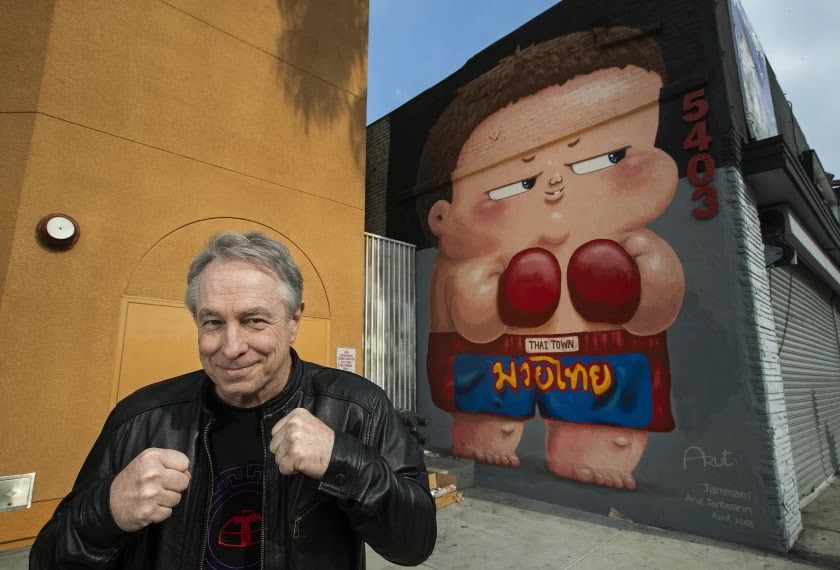

 (Mel Melcon / Los Angeles Times)


Tom Lutz is the author of Born Slippy: A Novel, And the Monkey Learned Nothing: Dispatches from a Life of Travel, and many other books, articles, screenplays, and other work. He is Distinguished Professor at UC Riverside and the founding editor of Los Angeles Review of Books. 


Now available on Amazon USA, Canada, UK and India


USA: https://www.amazon.com/dp/B096PFWHNR?ref=myi_title_dp

UK: https://www.amazon.co.uk/dp/B096PFWHNR?ref=myi_title_dp

CANADA : https://www.amazon.ca/dp/B096PFWHNR?ref=myi_title_dp

INDIA: https://www.amazon.in/dp/B096PDWJHT?ref=myi_title_dp


Saturday, August 7, 2021

Pratik Spring 2021 Issue Highlight: Yuyutsu Sharma on Irish Poet Anne Casey's new book, "the light we can not see"

 Book Review


YUYUTSU SHARMA


Mandalas of Healing

and Relief


Distinguished Irish poet Anne Casey’s new poetry collection, the light we cannot see, comes as a superb addition to the literature on our times clutched tight in the merciless grip of the ongoing pandemic. Away from her homeland, away from ‘the familiar shores’ of her childhood, she comes up with these exquisitely crafted poems that stir tumultuous currents in the quiet ocean of our consciousness and awaken us from a long stupor to look at our world where we “flounder against/ the splay of dying/the numb length of living.”

Casey’s book is a regal gift replete with high poetry of loss, love and exile, an evocation of a mislaid world of “a child of wind and rain, /stone and bog, stratified silt slipping/ slowly into a relentless seas.” 

                     —these bones

throb for home, to distance

themselves from decades

of these insatiable cliffs

of glaring glass and

crushing concrete—

floors and walls

 consuming all

the wildness

that once made us.


Gradually, the collection progresses into an elegant celebration of elements that shape her universe and in the process compel her to  return to her Irish roots. She builds a tactile world where humanity can thrive and thereby succeeds in  weaving a gripping web of deftly crafted poems sturdy enough to withstand the pangs of isolation in our turbulent times.


An Irish poet living in Australia, Casey’s adopted new home, she stares back through “that  magnificent /desolation of this devilled blue globe,” and weaves a tapestry of life, love, hope for the suffering humanity. She worries about the fate of the earth, desperate to fill in the dark, “to separate and break us/apart from the spectre of some alternate reality.” Out of her singularity, she desires to come to terms with the reality, replacing a Japanese man’s fancy phone to call the dead with a simple chat with her mother ‘by heart.’

The moments of intense pain and suffering caused by ‘a silently creeping curse, ‘ as  she calls Covid, are eased with her line breaks and word splits. The poems on the page transform into exquisite mandalas of healing and relief, exhibiting her struggle to slow down the suffering through her play with new forms and ingenious language reminiscent of Frank O’ Hara and John Ashbury.

For Casey is a wizard of winds, a master craftsperson, making us labor along with her in unraveling the core of her inherent message and meaning. She makes us marvel how regardless of space, time and terrain, we are all bleeding inside and industriously repairing our shattered selves each and every moment of our lives.

We are not wearing gas-masks. My lungs are

burning. Experts say the wild bushfires

ravaging this country are like the impact

of an atomic bomb. Over a million hectares

engulfed in flames. Many people have died.

Or lost their homes. The military have been

deployed. My son says it is the apocalypse.

Earth is trying to stop us Mum

before all the animals are gone.

There is no immediate solution in sight.

This is not a flashback scene. This is not fiction.

True to her masters, Boland, Heaney and Yeats, Casey brings in the magic of folklore and mythic figures and from the mouth of babies and speaking trees reveals the harsh truth of mankind in damaging world peace, unleashing an inferno of forest fires and other ecological hazards to strangle mother earth. Having drunk the blood of innocent creatures in history, as evident in one of her poems, human beings are akin to the weeping willows cursed to wander the earth for redemption. Casey evokes ancient Celtic goddess Bridget associated with fertility, health, poetry and witchcraft.  In the end, she herself starts looking like a modern-day shaman of spirits, marveling at the power of the human hands, “to raise up or hold down/their power to save or drown”

in the aftermath

of this smoke-choked summer—

almost enough

to lift

the smog of loss

while


our tainted antipodean

atmosphere

circles

this

hobbled

globe


the light we cannot see

Anne Casey

Salmon Poetry, Ireland, 2021


Recipient of fellowships and grants from The Rockefeller Foundation, Ireland Literature Exchange, Trubar Foundation, Slovenia, The Institute for the Translation of Hebrew Literature and The Foundation for the Production and Translation of Dutch Literature, Yuyutsu Sharma is a world renowned Himalayan poet and translator. He has published ten poetry collections including, The Second Buddha Walk, A Blizzard in my Bones: New York Poems, Quaking Cantos: Nepal Earthquake Poems, Nepal Trilogy, Space Cake, Amsterdam and Annapurna Poems. Three books of his poetry, Poemes de l’ Himalayas, Poemas de Los Himalayas and Jezero Fewa & Konj  have appeared in French,  Spanish and Slovenian respectively. Half the year, he travels and reads all over the world and conducts Creative Writing Workshops at various universities in North America and Europe but goes trekking in the Himalayas when back home.

Currently, Yuyutsu Sharma edits, Pratik: A Quarterly Magazine of Contemporary Writing.


Now available on Amazon USA, Canada, UK, Germany, France and India


USA : https://www.amazon.com/dp/B099X4LQLF?ref=myi_title_dp

UK : https://www.amazon.co.uk/dp/B099X4LQLF?ref=myi_title_dp

CANADA : https://www.amazon.ca/dp/B099X4LQLF?ref=myi_title_dp

FRANCE : https://www.amazon.de/dp/B099X4LQLF?ref=myi_title_dp

GERMANY : https://www.amazon.fr/dp/B099X4LQLF?ref=myi_title_dp

INDIA : https://www.amazon.in/dp/B099X32VCT?ref=myi_title_dp


Friday, August 6, 2021

PRATIK LA SPECIAL DOUBLE ISSUE HIGHLIGHT: GRANT HIER POEM, similar in texture


GRANT HIER

similar in texture


this thing in my hand

a pomme

or a piece of something

larger


its source

but seen as separate now

like an apple sliced thin

transparent


held to the sun

it glows more

slow warming

our learning


spark the tongue

to reflect past rains

our seasons past

passed on 


this thing in my hand

a pomme

stain at heart

star of seeds


and surprise

like a jicama root

crisp snap

and juice


d’anjou’s quiet

urging to color

or red delicious softness

and bitter skin


all in

we will hold our breath

as we hold it up to light

to see more


we will walk with the days

spent together

in memory

if not in life


hold slices to the sky

head back

laughing

close our eyes


to recall the pieces

the rounded sweetness

where all could be held

in one hand


Grant Hier is the inaugural Poet Laureate of Anaheim, Professor at LCAD, and poetry editor for Chiron Review. He’s won the Kick Prize, Nancy Dew Taylor Prize, and Prize Americana (Untended Garden). Recent books include The Difference Between, Similitude, and California Continuum. Hier is a musical artist, visual artist, graphic designer, and voice actor (Lincoln in the Bardo, 2018 Audio Book of the Year). He wrote and produced the CD Joyride, and wrote the liner notes for Los Lobos’ Llegó Navidad.  


Now available on Amazon USA, Canada, UK and India


USA: https://www.amazon.com/dp/B096PFWHNR?ref=myi_title_dp

UK: https://www.amazon.co.uk/dp/B096PFWHNR?ref=myi_title_dp

CANADA : https://www.amazon.ca/dp/B096PFWHNR?ref=myi_title_dp

INDIA: https://www.amazon.in/dp/B096PDWJHT?ref=myi_title_dp

Thursday, August 5, 2021

PRATIK LA SPECIAL ART Highlight : American Painter Alexandra Eldridge


PRATIK LA SPECIAL ART :

Alexandra Eldridge


Annice Jacoby on Alexandra Eldridge

Alexandra Eldridge, long cherished as a painter often working with new materials: Venetian plaster, reverse glass, antique and Chinese scrolls, is now working with turn of the century glass plate negatives found in a friend's attic in Texas. The Memento Mori haunt of these photos was an invitation she exquisitely exploits with a call and response from now to then and back again. Eldridge leaps a century later with these reclaimed images in a dialogue decadent in possibilities, brave and emblematic, inventing cosmologies of modern anxiety or Dionysian rebellion.


Winter Wolves

Eldridge has arrested the moment of the invention of photography, empowering our ancestor's gaze and stance. She has tapped into the audacity of paint and palimpsest to mimic our dreams, our jokes, and our fears. She plays with the development of image as the root of imagination. Animate is to bring alive, connecting our animal selves to the profound dignity and mindfulness of creatures. In her present body of work, she performs the subversive act of dressing up animals who have dressed us up. Shall the fox wear the garment? Or the mannequin become the fox, ermine, or peacock?


The Spiritual Warriors

When Eldridge works with paint, her ethereal surrealism tumbles into a dreamscape, liberating memory and meaning by discarding the orthodoxies of time and quotidian reality. She forges an uncomfortably contemporary penetrating psychology. Her universe is an infinite fantasy ball filled with tricksters and mystics. Harkening to Dada or Jung, Alexandra Eldridge's images consistently confront and dare; her inquiry is an ongoing seduction.


The Soul is in the Body


Alexandra Eldridge has had over forty solo shows, and has participated in many group shows throughout the U.S., as well as many international exhibitions.Alexandra has been commissioned to paint murals in the Place de Vosges, Paris, and her work has been used for the cover of twenty-four books of poetry. Traveling, as an important part of her inspiration has led her to artist’s residencies on the Island of Elba, Italy, and the Valparaiso Foundation in Almeria, Spain. Art News, Art LTD, Art On Paper, New American Painting, American Art Collector, Acrylic Artist and One Hundred Painters of the Southwest are just a few of the publications Alexandra has been featured in. Her work can be found in the collections of William Hurt, Steve Buscemi, and Edie Falco, along with many other prestigious collections

The Pride of the Peacocks


Now available on Amazon USA, Canada, UK and India


USA: https://www.amazon.com/dp/B096PFWHNR?ref=myi_title_dp

UK: https://www.amazon.co.uk/dp/B096PFWHNR?ref=myi_title_dp

CANADA : https://www.amazon.ca/dp/B096PFWHNR?ref=myi_title_dp

INDIA: https://www.amazon.in/dp/B096PDWJHT?ref=myi_title_dp


Tuesday, August 3, 2021

Pratik Spring Issue 2021 Art Special : Ira Marušič and Contemporary Painting


Ira Marušič and Contemporary Painting

by Andrej Medved


After the big story of Emerik Bernard, which reached a peak in the Eighties and Nineties, contemporary Slovene painting went into crisis, on both a personal level (few artists remained true to themselves and to the business of art) and a general one (due to the “incursion” of new media into national galleries). In spite of the rediscovery of the painting and “classical” artistic images in the USA and Europe, Slovene artists persisted with a quasi-painterly approach and exhibitions. A decisive exhibition was that offering a survey of the work of Živko Marušič in the Modern Gallery, entitled The painting is dead, long live the painting! (1998), which showed painting’s revitalisation. And it is precisely Živko Marušič who keeps surprising us with renewed artistic force and quality, and who is today one of the leading painters not only in Slovenia, but on a wider stage. Beside him stand Dušan Kirbiš and Marko Jakše with his phantasmagorical figures. In the new millennium there followed the discovery of new painting, an important return to the canvas. First with the “dream” images and classically marked metier of Mitja Ficko, and shortly after the painting wonder woven into the images of Joni Zakonjšek and Uroš Weinberger, which cleverly combine computer and social-existential iconography in temporal point zero, finally leading to a new wave of female painters who have returned trust in the message of painting and artistic realisation. Today, the most outstanding are Maruša Šuštar, Nika Zupančič, Suzana Brborović, Katja Pal, Barbara Drev, Nina Čelhar and Ira Marušič.

The canvases of Ira Marušič are marked not only by segments and fragments of images, but by their placement in the composition, the order, the construction, into a new rearrangement of what we already know. What is important is only the recognition of this new order and the final naming of this state. Then we shall grasp the meaning of the artist’s pleasure in the garden of Food, a closed garden of Eden. A moment’s inattention and we are already endlessly distant from realisation about the artistic work, from recognising art. Form is revealed, recognised, named. The same applies to the composition of her images. On the surface, carefully divided, disposed, but in reality we suddenly notice that we are – like Jonah from the Bible – in the belly of Marušič’s painting, that we are walking across its corpse, its head, limbs, backbone. That we are looking from the inside out… and in this is the garden of delight, the view from within the painter’s garden. We are within it, we feel each part of its body, we follow it in every direction, which now become places devoted to the Painting. Yes, it is disembodied, delayered, exteriorised – within Ira’s painting. In the new paintings of Ira Marušič, the method of decomposing reveals the inner body of painting; her painting.


Ira Marušič is not really interested in the simultaneity of artistic phenomena, although her paintings are always contemporary in some other way. Her canvases are aesthetically flawless; they are not characterised by strident colourism, but a Mediterranean sublimation of feeling and thought that are not only a reflection of artistic ideas and theories, but a movable, opaque colour plasma. The whole artistic screen is permeated by an endless peace; the moment is transformed into a sublime state, into a pure projection of paradise lost and found. Beauty and emphasised detail are evenly balanced and reawaken in the image, which represents a break with any kind of realism, although it is the artistic basis of these images that is the “pattern” for the creation of abstracted, original forms that are in principle imitative, mimetic.

A special feature of her artistic expression is an individual decision for creativity, in which clarity of theory is blurred and it is no longer possible to sublimate images to a specific aesthetic canon of previous artistic experience or to ideas outside the painting.

In her paintings, Marušič shows us (mostra, from mostrare)an artistic construct, which is a “network” that is not a construct in the pejorative sense, but is a demonstration, a display, a projection of something that in fact does not exist in the motif, in the proposal for an image, but comes into being in an original artistic fashion, which is both within and without, but still possible only in the special and personal artistic Language that now belongs only to her paintings. This intermediateness, where the transition from a completely banal motif to exceptional art arises, this inner leap from the almost mimetic level to the highest ethical-aesthetic level, this metamorphosis that facilitates the occurrence and birth of a new painting and a new style of painting, is (now) in reality a monstrum, that is an “artistic monster” as Sign: the highest Sign, which speaks from itself, the megasemeion of Ira’s depiction.


In her images there is something raised up, commended to our attention … floating in the ether… a barely perceived indeterminance in the resolution of the painted “figures” – food, of which the first part is a clear, pure, light, almost smooth surface, while the second disintegrates in the specific determinance of the selected object. And all around is gas, thick red or blue, in absence, in darkness… a substantial gas, “invisible, but present”, cosmic, universal, interplanetary. On the one hand is the ideal procreation of cleansed forms, almost mathematical beauty or harmony, and on the other the “leaning” towards colour, towards complete composition at the centre point of the picture.

Ira Marušič reconstructs (ur-)forms and a phantasm of a pre-modernist landscape through shaping an artistic language that does not replace realistic objects, but rather combines the artistic marker with an impulsive rhythm in the layering of paint. Her striking mental approach now once again combines each object, the whole artistic approach, with the subject, that is with the painter, and in so doing facilitates the clear connection of the painted images with nature. The melancholy in her works is still connected with the past, that is with the loss of landscape in modernism, and yet the artistic subject remains faithful to it, with no possibility that the situation will fundamentally change and be revolutionised. The psychological content of the painting is still filled with the hypertrophic past of the landscape, but it is given renewed meaning by the painter. This internalisation, this evasion alongside forgotten nature as a subject in contemporary postmodernist painting, is still somehow obvious, but the negativity – the deficit, the forgotten imitational painting procedures – is replaced by positive, postmodern romantic experience, which submits to emotional rhythm. The painter is shaping a style that bears signs of defeated melancholy, the traces of which are visible in previous pictures and are a kind of transmission or transfer of feelings into artistic images. These, then, are Ira’s landscapes, existential, intimate and emotional, with regard to which, as at the start of the century, empathy is important.

The best works are those that show the “inner text”, the basis of art as such, the inner body of painting and figurality, as an endless net that “lies in wait” for the definitions of forms, colours and space in order to “untangle” them into basic, intelligible elements. A kind of erosion of the paint layers of the whole surface into an indeterminate colourless mass, paint texture – a pictorial “text” – takes the place of the sacred body, so that it no longer acknowledges the external marker and painting is not supplemented by ideology, but rather the “spirit” of the artistic disposition in space prevails. Now the painting is no longer predetermined by meaning and content, but is “empty” and “erased”. Nevertheless, it still holds a kind of magnetism – and remanence – of the former allegorical and symbolic functions; it is still ritually woven.


The painting becomes a space of mental visions and rhythms; a space of widening chromatic texture to the edge and beyond. The whole surface of the canvas and the bearer is in reality a correlate of the figure: when diverse shapes, saturated with thick paint, burst from its body. Contraction squeezes the body from a structure to a figure, widening stretches it and diffuses it from a figure to a structure.

Ira’s “figures” are bodies without organs; that is to say, the depicted Figure or figurality is not subordinated to the organism, to a top-down system of “functioning”, from a single point that submits and determines and defines, but lives as a separate organ; original, prime; from all directions, within and without, mentally and bodily; the beginnings of a flexible, spasmodic and sensory being.

Translated from the Slovene by David Limon


Born in 1989 in Koper, Slovenian artist Ira Marušič studied at the Academy of Fine Arts in Venice, where she graduated in 2012 with the thesis »Il cuorenell'arte e nella medicina« (The Heart in Art and Medicine) with professors Carlo Di Raco and Elena Ribero as mentors. She continued her postgraduate study in Venice and in 2015 obtained a Master's Degree in painting under the guidance of professors, Carlo Di Raco and Aldo Grazzi, with the thesis »Il tempo e l'arte« (Time and Art).


 Now available on Amazon USA, Canada, UK and India

USA : https://www.amazon.com/dp/B099X4LQLF?ref=myi_title_dp

UK : https://www.amazon.co.uk/dp/B099X4LQLF?ref=myi_title_dp

CANADA : https://www.amazon.ca/dp/B099X4LQLF?ref=myi_title_dp

FRANCE : https://www.amazon.de/dp/B099X4LQLF?ref=myi_title_dp

GERMANY : https://www.amazon.fr/dp/B099X4LQLF?ref=myi_title_dp

INDIA : https://www.amazon.in/dp/B099X32VCT?ref=myi_title_dp


Monday, August 2, 2021

PRATIK LA SPECIAL POETRY : ALEXIS RHONE FANCHER'S "The Famous Poet Sexts Me While His Wife’s Asleep"


ALEXIS RHONE FANCHER

The Famous Poet Sexts Me While His Wife’s Asleep


Bad boy poets thirst for love, too.

He pretends it’s a joke, but it’s not.


When he needs quenching, he turns to me.


As always, he lies on his side of the bed, pajamas

unbuttoned, hunched over the phone so wifey can’t see the glow.


She’d hate to see him happy,

hard cock straining against his fly.


What are you wearing?


I’m not. I fire off a selfie; I can almost hear him moan.


You light me up.


I tell myself not everyone’s a famous poet’s muse.

Even if that bad boy’s over 70.


Tonight he wants narrative; I stoke his dreams,

tell him what every man wants to hear, how huge he feels


between my thighs, how I burn for his touch.


When he ignites, he’s nineteen again, or even forty,

not this aging poet, jacking off 


to a girl he should pay by the hour.


That one time we met, he smelled like bonfire,

his bones, brittle kindling, blue eyes aflame.


And I, who sleep solo, wait for his texts.

Smoke signals on a desiccated highway.

Until I light the match.


Alexis Rhone Fancher is published in Best American Poetry, Rattle, Verse Daily, and elsewhere. She’s the author of five poetry collections, most recently The Dead Kid Poems, (KYSO Flash Press, 2019). A multiple Pushcart Prize nominee, Alexis is poetry editor of Cultural Weekly. 


Now available on Amazon USA, Canada, UK and India

USA: https://www.amazon.com/dp/B096PFWHNR?ref=myi_title_dp

UK: https://www.amazon.co.uk/dp/B096PFWHNR?ref=myi_title_dp

CANADA : https://www.amazon.ca/dp/B096PFWHNR?ref=myi_title_dp

INDIA: https://www.amazon.in/dp/B096PDWJHT?ref=myi_title_dp


Sunday, August 1, 2021

PRATIK SPRING 2021 ISSUE HIGHLIGHT : HEBREW POET GILAD MEIRI POEM, Footnote to “Footnote to Howl”


GILAD MEIRI

Footnote to “Footnote to Howl”


Small! Small! Small!

Jews Small! Country Small! Citizen Small! The pocket Small!

The money Small! The sesame seed Small! The head

Small! IDF Small! The finger on the trigger Small! Bullet in the

Chamber Small! The screw Small! The hole in the retina Small! Rachel your youngest daughter Small!

Pearl of the Self Small!

Shai Dotan Small Dorit Weisman Small Yuval

Small Ariel Small Gilad Small Lior

Small! Mother’s reparations from Germany Small! Titus and the Mosquito

Small! The angel Small! Shiva Small! Yaniv Katan*

Small! Win-margin Small! The faith Small! Yom Kippur Katan Small! Minor holy day Small! Happiness

Small! House Small! The food Small! Israel Small! Sea of Galilee Small! City center

Small! Army Camp 80 Small! My Small member

Small! Rock scene Small! The screen Small! I’m Small! Piece of Heaven

Small! The distance between you and me

Small! Step Small! Sky small! The air, oil, ground water Small!

The secret Small! The word Small! The fine print Small! Hebrew vowel Small!

The silence Small!


Translated from the Hebrew by Ohad Stadler


Gilad Meiri  has published 12 books. He is the manager and the founder of several literary institutions including  Address, Poetry Place, and One Square Meter, Jerusalem Poetry Festival. He is co-manager and co-founder with Noa Shakargy of the College of the Literary Arts. He is one of the editors and founders of Ketovet literary magazine and Nanopoeticaliterary magazine.  For poetry, Gilad has won several awards including The Prime Minister’s literary award, Acum award and the Jerusalem literary award. 


Now available on Amazon USA, Canada, UK and India

USA : https://www.amazon.com/dp/B099X4LQLF?ref=myi_title_dp

UK : https://www.amazon.co.uk/dp/B099X4LQLF?ref=myi_title_dp

CANADA : https://www.amazon.ca/dp/B099X4LQLF?ref=myi_title_dp

FRANCE : https://www.amazon.de/dp/B099X4LQLF?ref=myi_title_dp

GERMANY : https://www.amazon.fr/dp/B099X4LQLF?ref=myi_title_dp

INDIA : https://www.amazon.in/dp/B099X32VCT?ref=myi_title_dp